


How to paint fireplace surrounds

Images courtesy of @livinginfifteen & Douglas Bridge
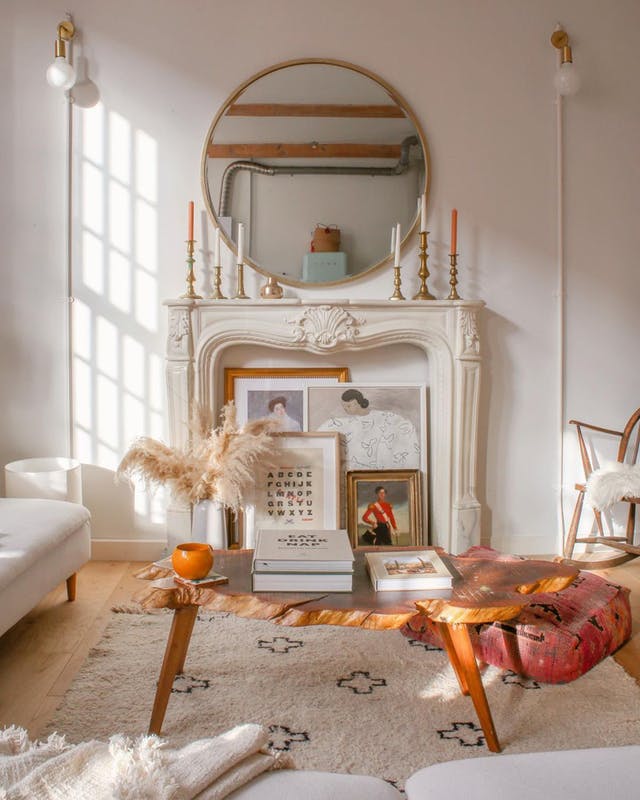
Lucky enough to have a fireplace in your home? Other than the warmth and cosiness this brings, you can use your fireplace to refresh the look of your living room and add colour. Paint your fireplace surrounds to turn it into a focal design feature in your room, even when it's not all lit up.
When it comes to deciding which part of your fireplace surrounds to paint, the general rule is the same as when painting radiators: if you can touch the surface, you can paint the surface. If you’re able to keep your hand on a surface without it burning you, it should be fine to paint. Leave any surfaces that get direct heat alone, as the higher temperatures will affect your paint job. We wouldn't recommend painting inside the fireplace itself.
The exact process you follow and the paint you use may vary based on the type of surface you’re painting. Learn more about how to paint your fireplace surrounds and which surfaces are most suitable for paint.
Tools you’ll need to paint your fireplace surrounds
First, gather your tools:
- Paint roller: reach for our 4” paint roller for smaller surfaces or the 9” paint roller when you’re working with more space.
- Paint tray: this biodegradable pulp paint tray is designed to minimise waste and maximise efficiency
- Paint: explore our range of paint colours to find the right shade for your space.
- Brush: cut corners like a pro with a cutting-in paint brush
- Biodegradable dust sheet or a decorators canvas to protect your floors and furniture
- Painters masking tape for a precise paint job. Find out more about how to use masking tape while painting.
- Sanding block (if you’re working with a wooden surface)
How to paint a wooden fireplace
Wooden fireplace surrounds provide the perfect surface for a paint job. Follow the steps below:
- Start by sanding: we’d highly recommend a light sand for wooden surrounds – especially if your wood is chipped, damaged or untreated. Sanding will even out the surface and help reduce those imperfections.
- Get rid of dirt and dust: clean the surface of any dust and sanding debris and allow to dry.
- Take time to prime: if the wood is untreated or hasn't been painted before, we recommend priming or a mist coat. If it has been painted or is in a good condition, you don't need to prime at all.
- Paint away: if you’re painting a wooden fireplace surround, either an eggshell or matt finish would work just fine. Use your paint roller to paint onto the main surfaces and the cutting-in brush for any corners. Learn more about how to paint clean lines when decorating.
- Finish with a varnish: we would recommend a varnish for extra durability and to stop pokers from scratching or chipping at the surface. Make sure you leave the paint dry properly before applying varnish.

How to paint a brick fireplace
If your fireplace is made of smooth brick, we recommend sanding it before you start painting. This creates a grittier surface that is easier for paint to stick to.
Clean and allow to dry before starting the painting process.
How to paint a marble fireplace
Our matt paint is multi surface and appropriate for walls and interior woodwork. However, we can’t guarantee the quality or longevity of the paint on a stone surface and would recommend looking for a specific paint for this job.
Note: tiles and marble are generally very hard surfaces for any paint to adhere to, so we wouldn’t recommend painting onto those surfaces.
How to paint a stone fireplace
Just like marble or tiles, we can’t guarantee the quality or longevity of our paint on a stone surface. If you’re painting a stone fireplace, try looking for a special paint that’s made to specifically work on this surface.
Need some help finding the right paint colour scheme for your fireplace surrounds? Book a video colour consultation with one of our colour experts, and you’ll get a 30 minute consultation and a bespoke mood board with the perfect palette for your space. You can also learn how to make a mood board here.